If you have spent any time on LinkedIn, in a marketing newsletter, or even in a casual conversation with another business owner lately, chances are someone has mentioned “ai in digital marketing”. These days, it seems to come up everywhere and for a good reason. The problem is that most conversations around AI tend to go in one of two directions. Some people talk about AI like it’s some kind of magic solution that can fix every marketing challenge overnight. Others get so technical that the average business owner loses interest before they get to the point.
This article is different.
We looked at what’s actually happening in marketing right now, the questions businesses are really asking when they search terms like “AI marketing tools”, AI content marketing” or “how does AI work in digital marketing”, and pulled everything together into a practical guide.
Because beneath all the buzz, most business owners are simply trying to answer one question: Everyone seems to be talking about AI in marketing these days, but what does it actually mean for my business and where do I even begin?
What Does “AI in Digital Marketing” Mean
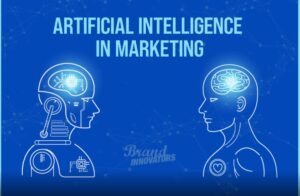
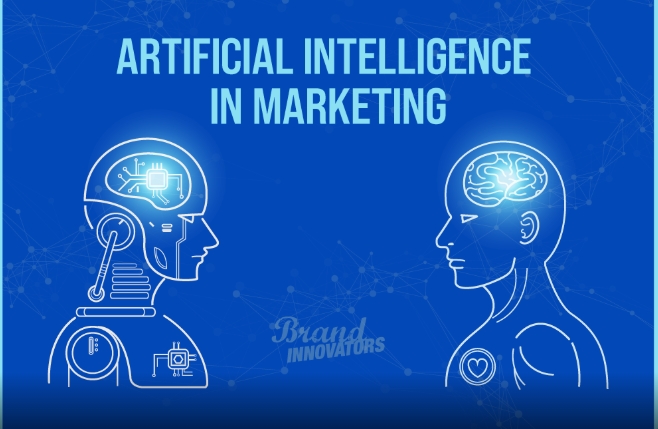
Forget the buzzwords for a moment. At its core, AI in digital marketing can be defined as using technology to help businesses make better decisions, work more efficiently, and connect with customers in more meaningful ways.
In practical terms, it helps marketing teams do three things more effectively which is to:
1. Understand their audience
2. Create relevant content
3. Optimise campaigns based on real-time data.
The goal isn’t to replace marketers. It’s to give them tools that make their jobs easier.
Not too long ago, many of these capabilities were only available to large companies with significant budgets and dedicated data teams. Today, they’re built into platforms that businesses of all sizes can access and use with minimal training. You might already be using AI without even realising it. Platforms like Google Ads and Meta Ads Manager rely on AI to analyse user behaviour, identify the right audiences, and improve ads performance automatically. Tools like HubSpot use AI to support tasks such as lead scoring, email personalisation, and content recommendations.
Rather than taking over the creative side of marketing, AI handles much of the repetitive analysis and manual work behind the scenes. That gives marketers more time to focus on strategy, storytelling, and building stronger relationships with customers.
Why This Topic Is Everywhere Right Now
The growing interest in AI isn’t just another marketing trend. It’s a response to how quickly consumer behaviour is changing.
- Search behaviour itself is changing: Users are not just typing keywords into Google anymore; they are asking ChatGPT, Claude, Gemini, and Perplexity to summarise, compare, and recommend. If your brand is not showing up in those AI-generated answers, you risk becoming invisible to a growing share of your audience.
- Content production has been turned on its head: AI tools can now produce blog posts, ad copy, social captions, and even video content in a fraction of the time it used to take which is exactly why marketers who learn to use these tools well are pulling ahead of those who do not.
- Personalisation is no longer optional: Target audience expects emails, ads, and website experiences that feel like they were made for them, and AI is the only realistic way to do that at scale with a little bit of human touch.
- The numbers back it up: Recent industry reporting now shows that large majority of marketers are using AI for content creation and production. Brands that haven adopted AI-driven strategies are consistently seeing stronger engagement and return on investment.
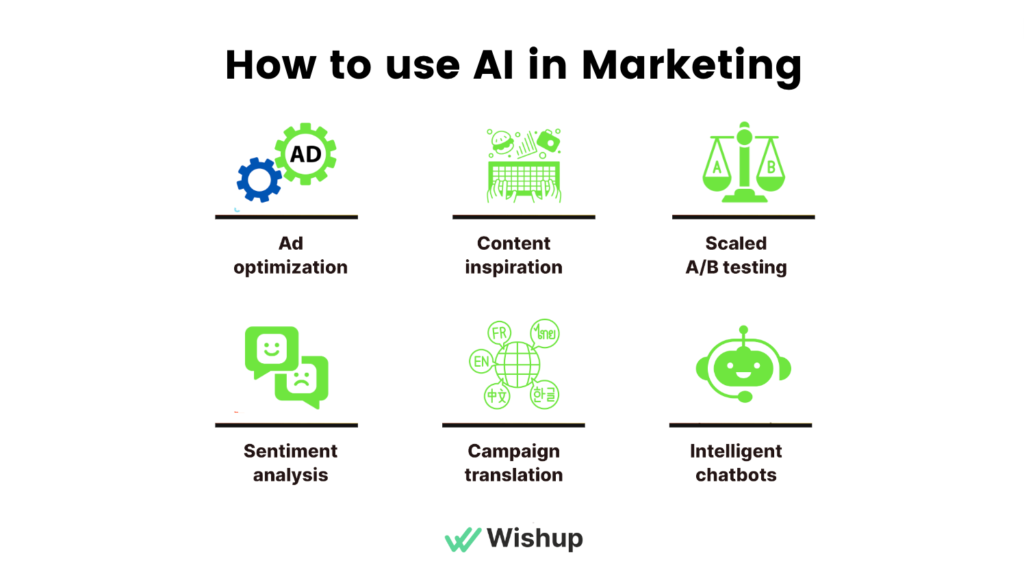
Where AI Is Already Changing Marketing (With Real Examples)
1. Smarter, Faster Content Creation: Creating content consistently has always been one of the biggest challenges for marketing teams, especially smaller ones. AI tools are making that process much easier.
Today, businesses can use AI to brainstorm ideas, draft blog posts, write social media captions, and even create short-form videos for platforms like Instagram Reels and TikTok. That doesn’t mean AI should be left to create everything on its own. The real value comes from using it to speed up the time-consuming parts of the process while your team focuses on strategy, creativity, and making sure the content reflects your brand’s voice.
2. More Personalised Campaigns: Customers expect brands to understand what they need and deliver relevant experiences. AI helps make that possible. Instead of relying only on basic demographics like age or location, AI can analyse customer behaviour, browsing habits, purchase history, and engagement patterns to build a much clearer picture of your audience.
As a result, the emails people receive, the ads they see, and the landing pages they visit can be tailored to their interests automatically without your team having to create dozens of different versions manually.
3. AI Powered Search and Discoverability: This is one area many businesses are still overlooking. Search is no longer limited to a page of blue links. More people are turning to AI-powered tools to ask questions, compare products, and get recommendations.
That shift means businesses need to think differently about online visibility. Instead of focusing only on keywords, brands should prioritise creating useful, trustworthy content that genuinely answers people’s questions.
The goal is to become a source that AI tools can reference and recommend, not just another website competing for rankings.
4. Predictive Analytics and Smarter Ad Spend: One of AI’s biggest advantages is its ability to spot patterns quickly. Rather than waiting until a campaign ends to understand what worked, AI tools can identify which audiences are most likely to convert and adjust targeting or budgets in real time.
For businesses working with limited marketing budgets, this can make a noticeable difference. Every naira spent goes further when your campaigns are reaching the right people from the start.
5. Always On Customer Engagement: Customer expectations have changed. People want answers quickly, regardless of the time of day. Modern AI chatbots are far more capable than the scripted bots many businesses experimented with a few years ago. They can answer common questions, recommend products, qualify leads, and guide customers through the buying process.
Whether someone contacts your business through your website, WhatsApp, or social media channels, AI can help ensure they’re not left waiting for a response.
AI in digital marketing is not a future trend anymore, it is the infrastructure modern marketing already runs on. The businesses that will struggle in the next few years are not the ones using AI “wrong.” They are the ones not using it at all, while their competitors quietly get faster, more personalised, and more visible online. The good news is that you do not need a massive budget or a dedicated AI team to start. You need a clear understanding of where AI fits into your existing digital marketing strategy and a partner who can help you figure out which tools are actually worth your time.
Want help figuring out where AI fits into your marketing strategy? Get in touch with IzuTrix learn more about our digital marketing solutions so we can build a plan that works for your business.